When the days get short and the house fills with candlelight, pine and the smell of something baking, the flowers on the table have a job to do. They have to feel warm rather than formal. They have to hold up through a long evening, a second helping, and the days either side of it. And they have to belong to the season without looking like everyone else's decorations.
Lisianthus — also known as eustoma — does all three. It is a flower that has quietly become a favourite for festive work, not because it shouts "Christmas", but because it fits the way we actually decorate now: natural, generous, and made to be lived with.
Here is why lisianthus deserves a place in your Christmas decorations this year.

1. The traditional Christmas colours, grown rather than added
Most Christmas arrangements borrow their red from berries and their green from foliage. With lisianthus, the colour is in the flower itself.
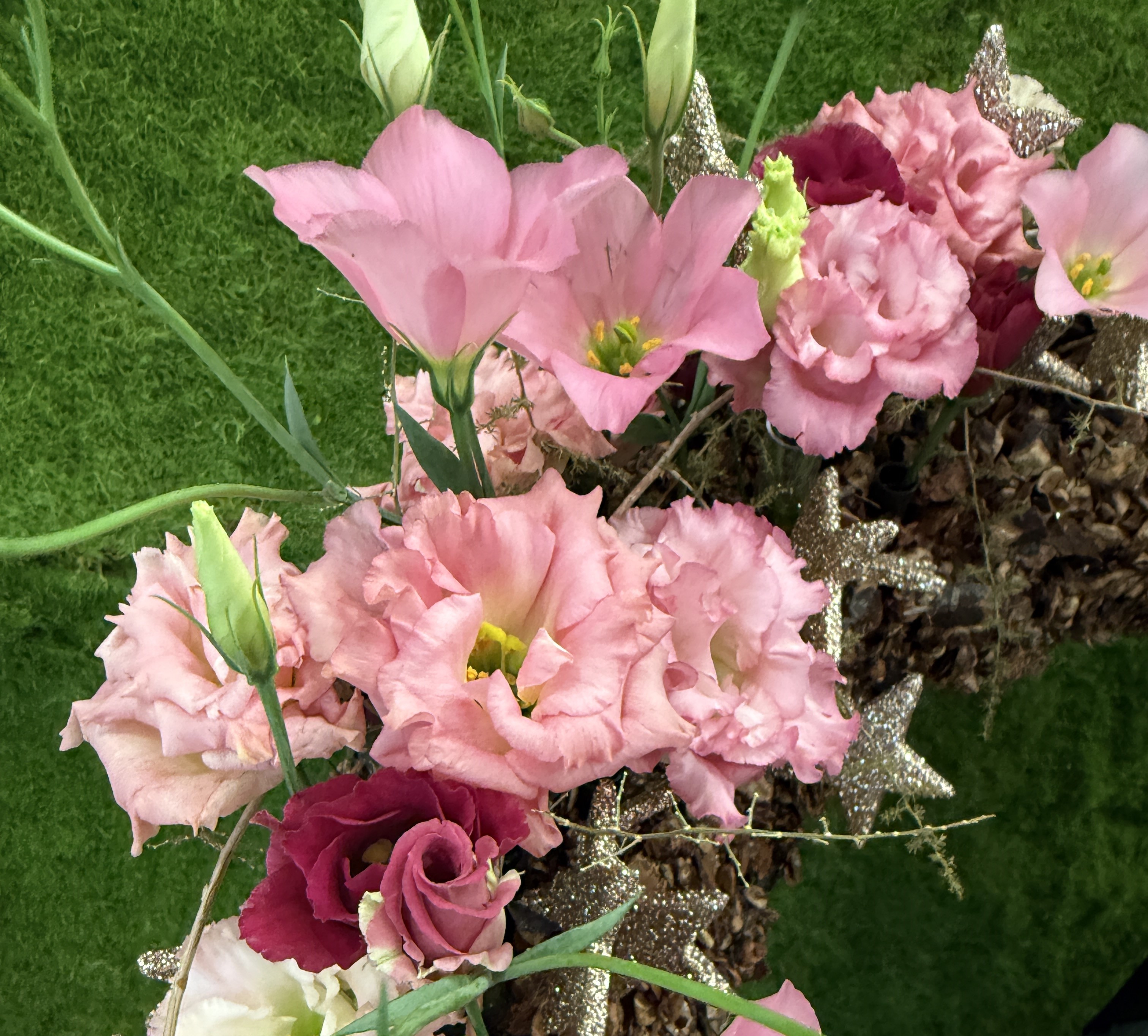
White is the backbone of the assortment — pure, clean varieties such as Alissa Pure White and Alissa White that read as snow rather than as summer. Red is available too: Arosa Red carries a deep, saturated red in a full double flower, so it sits convincingly beside amaryllis and roses without looking borrowed. And green — genuinely rare as a cut flower colour — comes through varieties like Alissa Green, a soft natural green that gives you foliage tones in petal form.
The practical result is consistency. A wreath, a table runner and a hallway arrangement can share the same red-green-white story, in the same texture, at the same quality. Nothing clashes, because it all comes from the same flower family.
2. And a more modern palette when you want to soften things
Traditional is not the only way to do Christmas. Recent seasons have moved steadily towards muted, warm, lived-in schemes — and this is where lisianthus becomes genuinely hard to replace.
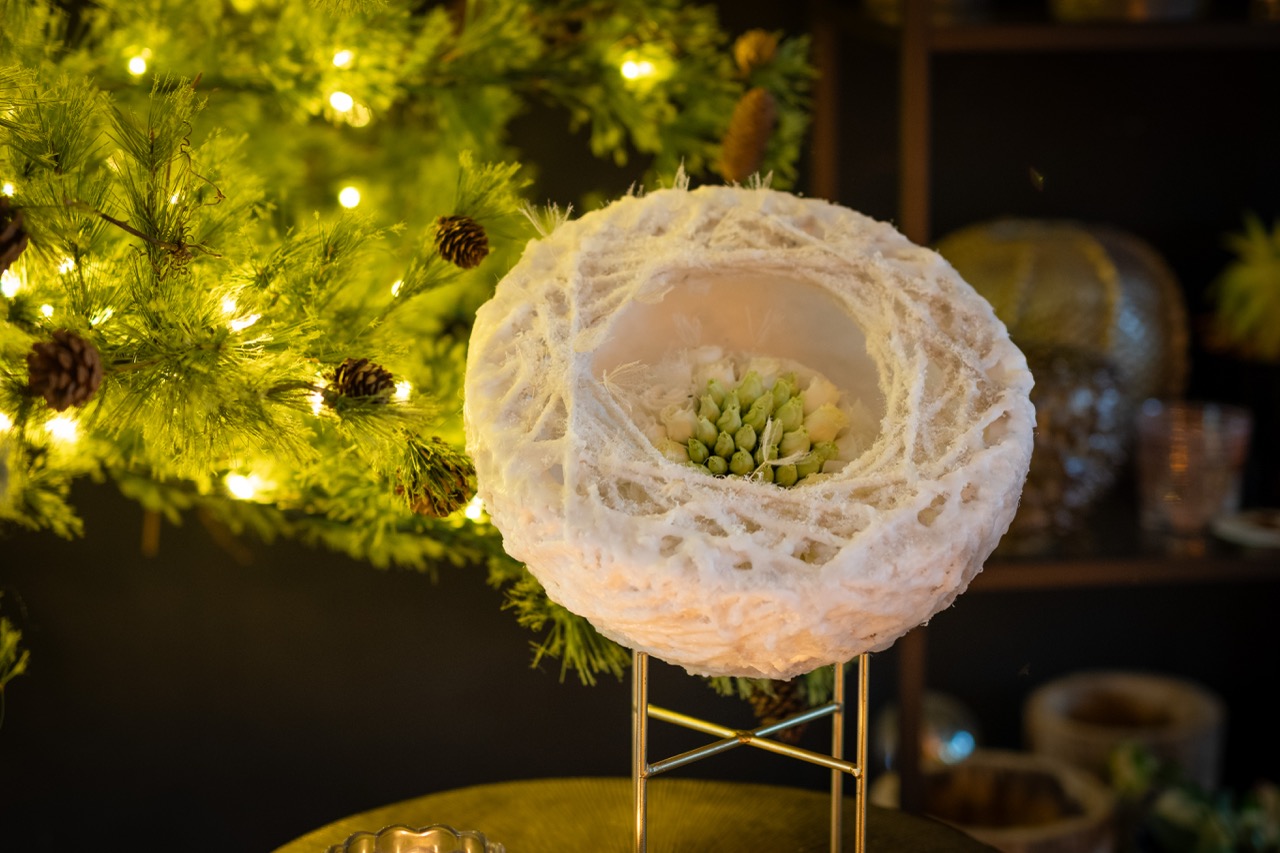
Champagne is the shade doing most of that work. Alissa Champagne brings a soft, sandy warmth that sits beautifully with ivory candles, linen, aged brass and natural wood, and it keeps an all-white arrangement from feeling cold. Paired with sage-green lisianthus and dried citrus, it reads as a florist's window rather than a supermarket door.
Because these tones come from the same flower, you can build an entire scheme — from bright traditional to quiet and neutral — without changing your mechanics, your stem counts or your supplier.
3. Natural shapes that look hand-picked, not manufactured
Christmas decorating has turned decisively towards the natural: asymmetric wreaths, foliage left a little wild, arrangements that look gathered that morning from the garden.
Lisianthus suits that instinct because its shape is genuinely natural. The single and botanical varieties have a lighter, more open, freshly-picked character, with gently arching stems and a relaxed line. The double varieties give you the full, ruffled, rose-like opulence that makes a Christmas centrepiece feel generous.
Either way, the stem carries buds and open flowers at different stages, so the silhouette stays soft and irregular. Nothing looks stamped out. In a season where so much decoration is symmetrical and shop-bought, that naturalness is the difference between a display that looks styled and one that looks ordered.
4. A vase life that outlasts the Christmas calendar
This is the reason florists keep coming back to lisianthus, and at Christmas it matters more than at any other time of year.
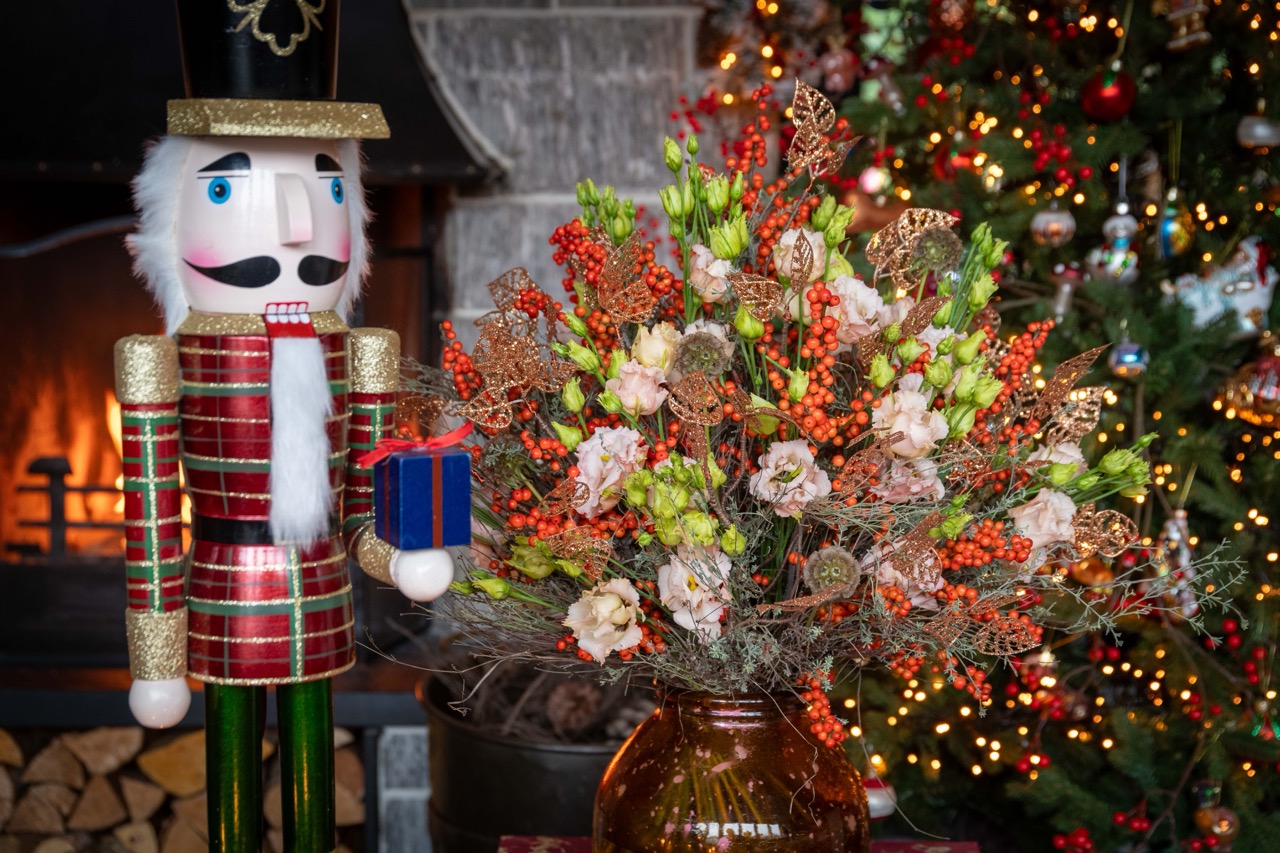
Handled well — a clean vase, a fresh angled cut, leaves removed below the waterline, kept away from direct sun and ripening fruit — lisianthus stays looking its best for ten days or more. That covers the run-up to Christmas, the day itself, and the quiet stretch afterwards when the last thing anyone wants to do is re-do the flowers.
For anyone decorating a home, a restaurant, a hotel lobby or a church, that longevity is the whole argument. The arrangements still look considered on 27 December, which is exactly when most fresh flowers have given up.
5. It is made for wreaths
A Christmas wreath is a demanding place for a flower: shallow water, cold air, a lot of handling. Lisianthus copes because its stems are light and flexible, and it holds its shape rather than shattering.
Worked into a mossed base with conifer, bay or eucalyptus, a handful of lisianthus becomes the focal point without overwhelming the greenery — three, five or seven clusters, never evenly spaced, and the wreath reads as designed rather than assembled. Deep red doubles for a traditional door; champagne and sage for something quieter and more contemporary.
It is one of the few flowers that can carry a wreath as a flower rather than as a garnish, and still look fresh a week into December.
6. And it is at its best on the Christmas dinner table
The table is where lisianthus genuinely excels, because a Christmas dinner places demands on flowers that a bouquet never faces.
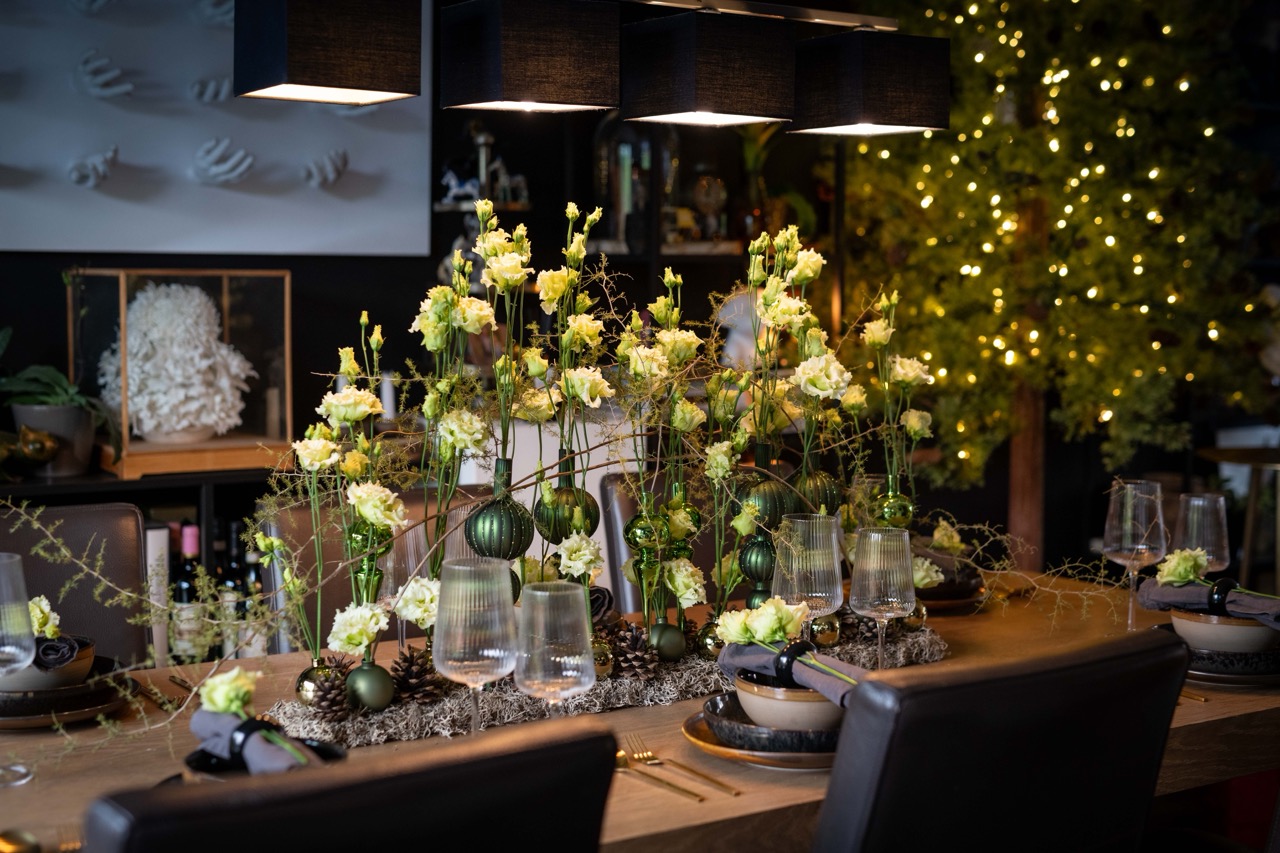
Arrangements need to sit low, so people can see across the table and talk. They need to survive a warm room, candles, and several hours of company. And they should not compete with the food — which is why lisianthus's lack of fragrance is an advantage rather than a compromise. In a room already full of pine, candle smoke, wine and roasting, a flower that adds beauty without adding another scent is doing exactly the right job.
A shallow bowl of white and champagne doubles, a few red stems at the centre, greenery pulled low over the rim: it takes minutes, costs far less than it looks, and still looks right on Boxing Day.
7. Multiple buds per stem: decorations that keep opening
Each lisianthus stem carries several buds at different stages of development. As the first flowers open, the ones behind them are already on their way.
Over the Christmas period that means your arrangements don't peak on the day you make them. They keep developing — a little fuller on Christmas Eve, still opening on the 27th. For a table that has to look good for a lunch, then supper, then the next day's leftovers, this steady unfolding is quietly perfect.
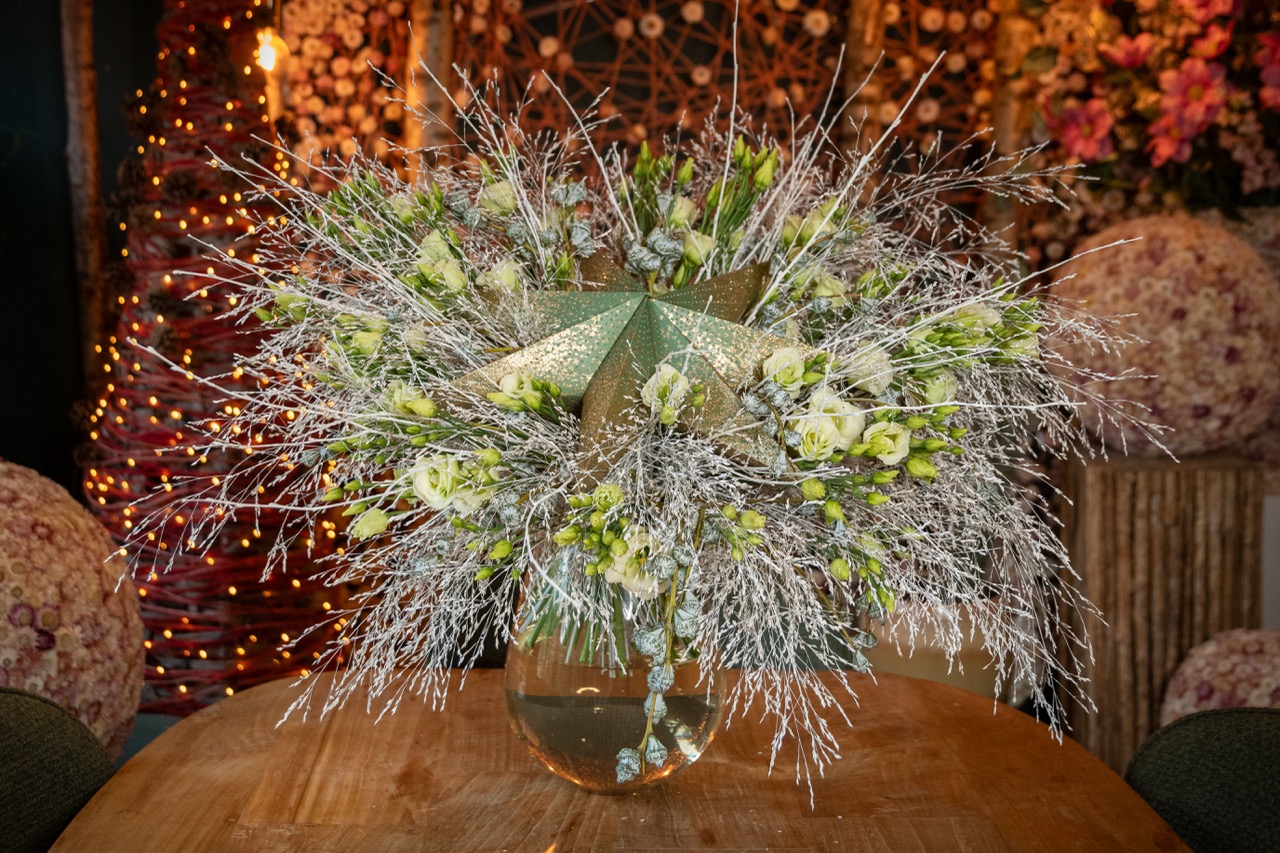
It also means better value: more blooms per stem, more impact per arrangement.
8. Available all year round, so December is never a compromise
Many Christmas flowers are a seasonal exception — forced, flown in, or priced accordingly in the last two weeks of December.
Lisianthus is not. Dutch growers produce it twelve months a year, with more than sixty varieties available all year round, which is why our inspiration book carries the theme *Always in Season*. For florists and buyers, that removes the usual December anxiety: the flower you built the design around is simply there, at the quality you expect, whether you are working in November or on the 23rd.
Lisianthus at a glance: why it works for Christmas
- Traditional white, red and green — in the flower, not just the foliage
- Modern champagne and soft neutral tones for muted schemes
- Natural, botanical shapes for hand-picked, asymmetric designs
- Vase life of ten days or more with good handling
- Light, flexible stems that suit wreaths and door decorations
- Unscented, so it never competes with candles or the Christmas table
- Multiple buds per stem — arrangements that keep opening through the holidays
- More than sixty varieties available all year round from Dutch growers
Final thought
Christmas flowers usually ask you to choose: traditional or contemporary, generous or understated, beautiful on the day or still beautiful a week later. Lisianthus is unusual in that it does not make you choose.

It brings the traditional colours, the modern neutrals, the natural shape and the staying power, all in one flower — which is why it has moved from a summer favourite to a genuine winter one. Whether it anchors a wreath on the front door or sits quietly among the candles on the Christmas table, it does the thing great decoration is supposed to do: it makes the room feel finished, then lets everyone get on with the evening.
Ready to decorate with lisianthus? Explore our Christmas inspiration gallery for wreaths, table arrangements and festive designs, browse the full variety range, and find arrangement tutorials on our YouTube channel. Discover more at Lisianthus.nl.
FAQ
Is lisianthus a good flower for Christmas arrangements?
Yes. Lisianthus is available in traditional Christmas colours — white, red and green — as well as modern champagne and neutral tones, and it has a vase life of ten days or more with good handling, so arrangements still look fresh well beyond the day itself.
Does lisianthus come in red and green?
Yes. Red is available in full double varieties such as Arosa Red, and green in varieties such as Alissa Green, a soft natural green that gives foliage tones in petal form. Both are grown as cut flowers, not dyed or tinted.
How long does lisianthus last in a Christmas arrangement?
With a clean vase, a fresh angled cut, leaves removed below the waterline and placement away from direct sun and ripening fruit, lisianthus can stay looking its best for ten days or more. In a wreath or shallow arrangement it will be shorter, since the stems have less water to draw from.
Can lisianthus be used in a Christmas wreath?
Yes. Its light, flexible stems and firm petals make it well suited to wreaths. Work it into a mossed base with conifer or eucalyptus, in small odd-numbered clusters, and keep the moss damp so the stems can keep drinking.
Is lisianthus available in December?
Yes. Dutch growers produce lisianthus all year round, with more than sixty varieties available throughout the year, so it is a genuine December flower rather than a forced seasonal exception.
Does lisianthus have a scent?
Lisianthus is essentially unscented. In a room already filled with pine, candles and food, that makes it a practical choice for Christmas tables, where a heavily scented flower would compete.